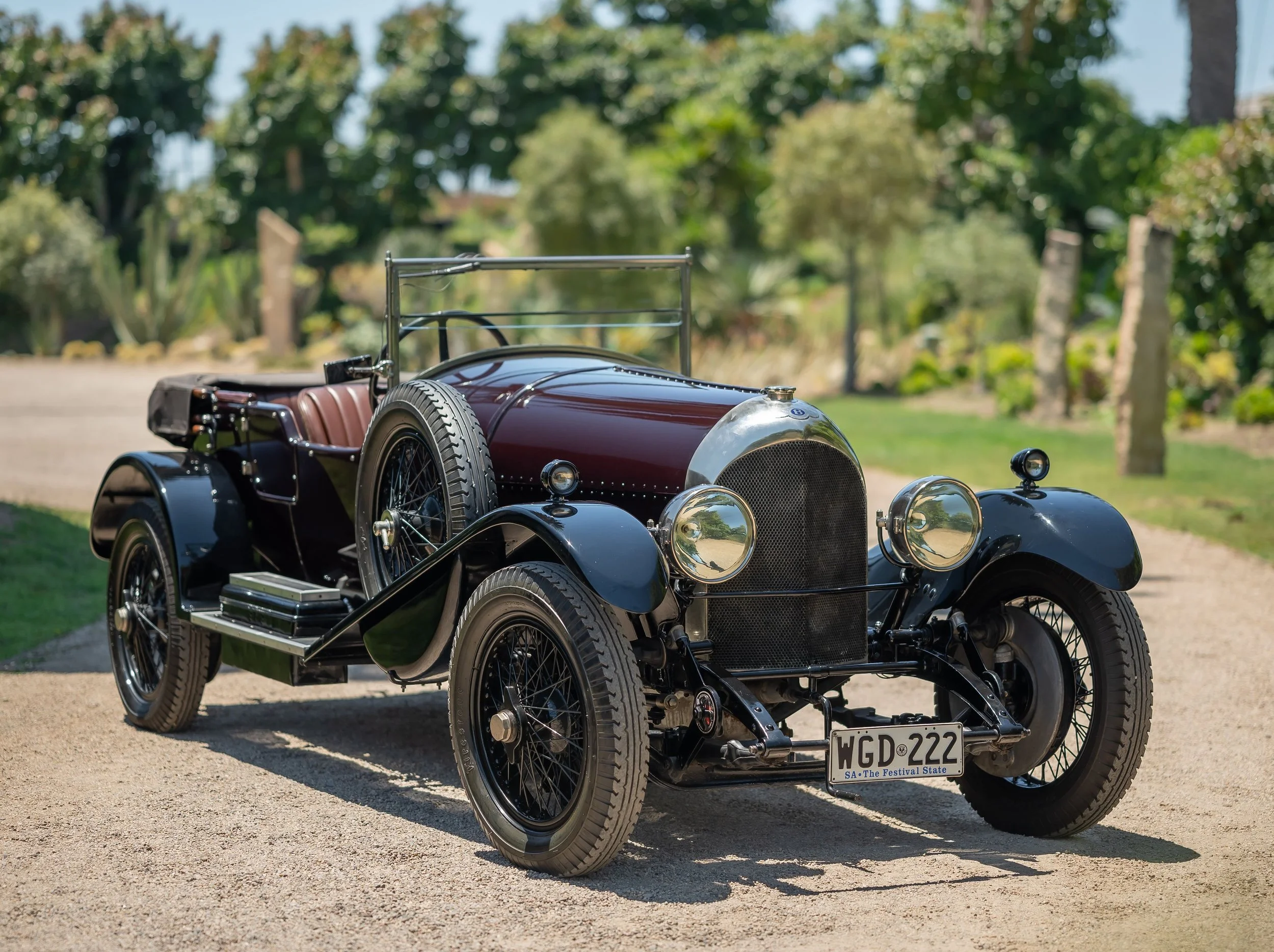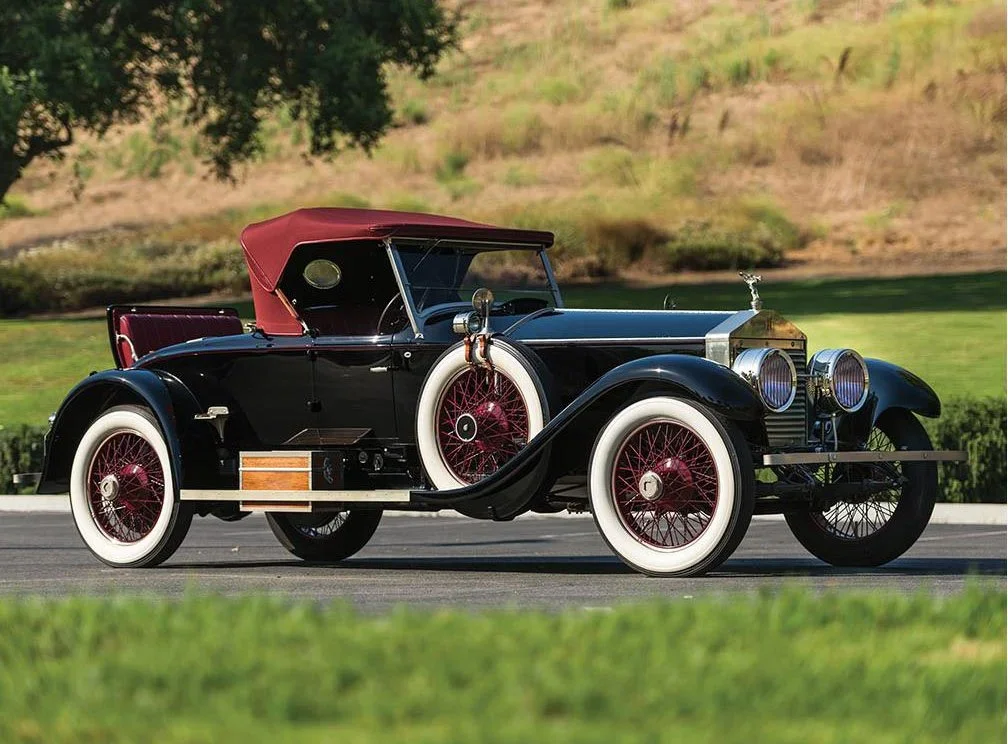

c1927 Eccles Four-Wheel Showman’s Wagon
Generously Donated to the Museum in 2021 by James & Kate Gubelmann
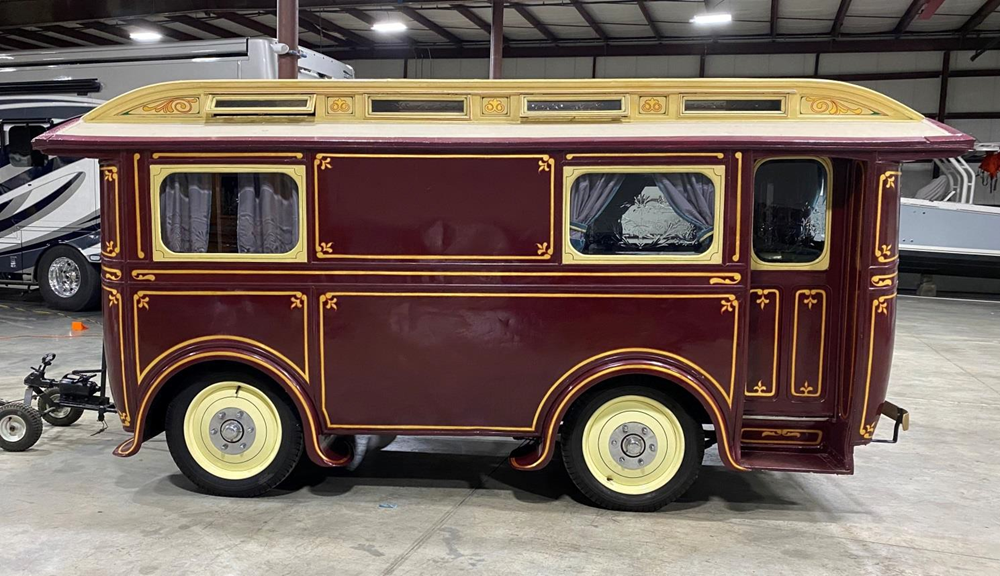
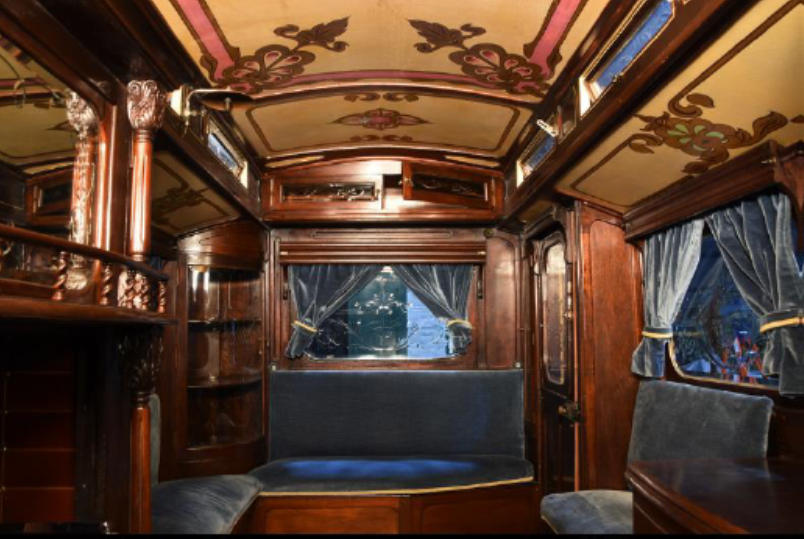
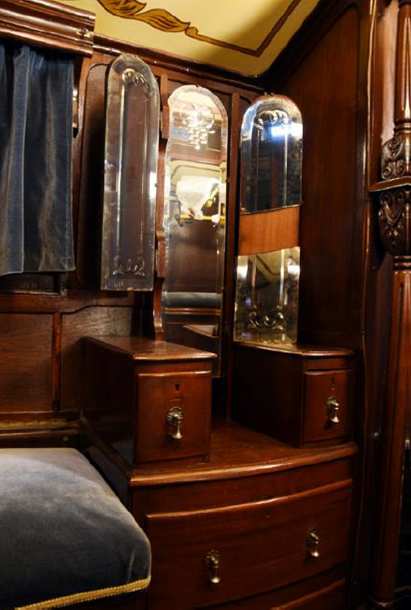
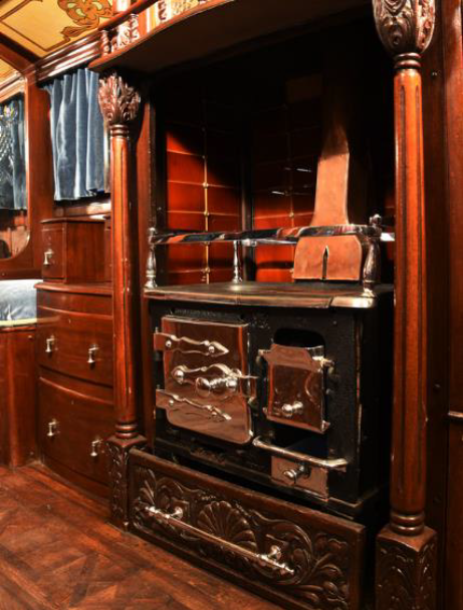
· Also marketed as the de Luxe Living Wagon or Living Caravan
· The 1920s was the birth of caravanning as a lifestyle. During the 1920s, Eccles became the leading caravan manufacturer in Britain—and arguably the world.
· Custom-made with lantern roof, ornamental cut-glass windows, mahogany woodwork
This c1927 Eccles de Luxe Showman’s Living Wagon is a two-axle variant that appears to be in highly original, unrestored condition with routine maintenance and touch ups noticed on the exterior with a highly original interior. The exterior of this c1927 Eccles de Luxe Showman’s Living Wagon appears to be of a standard Eccles style that has been upgraded with the “de Luxe” Lantern Style Roof and a brightly colored and one-off paint design. The bold burgundy finish is highlighted with yellow accents, green pinstriping, and decorative gilding. Exterior windows are large, uniquely beveled, and decorated with attractive engravings.
Eccles turned caravanning from a curiosity into a desirable leisure activity. By the late 1920s consumers could browse through the Eccles Motor Caravan catalog, similar to high-end automobiles, and select from variety of caravans ranging from a basic £155 example to an extravagant £700 work of art. Like this caravan, custom order “Showman’s Caravans” were available with amenities such as lantern style roofs and fitted with ornate and well-crafted interiors that more closely resembled a well-appointed Victorian designed home or a Rolls-Royce Silver Ghost Limousine than a “Travel Trailer.”
Mr. Gubelmann acquired this wagon in 1974 while he was living in the United Kingdom. Upon purchase was told that the “’Living Wagon’ was used as part of a steam traction engine circus train and would have been the last car in line much like an American caboose” and “due to the lavish interior with a Dutch door, it was assumed to be the owner or owner’s wife’s private parlor and the Dutch door was used to sell tickets from.”
The British-built Eccles Caravan can be traced back as far as 1913 when father and son duo W.A. Riley Senior and W.J. Bill Riley built and installed their first “caravan-styled” body onto a 1909 Talbot chassis, thus building what is believed to be the first-ever coach-built motorhome.
In 1919 a failing Birmingham haulage business was taken over by W.A.J. Riley and his son W.J. Riley. The son returned from service in the Royal Flying Corps during the First World War and was inspired by using trailers on the front line. After a few years of development, Eccles eventually went into serious production of luxury trailer caravans in 1922. Orders began coming in as the automobile-owning upper class became more interested in the new hobby. Numerous articles were written on “the joys, freedom, and health advantages motor caravanning gave.”
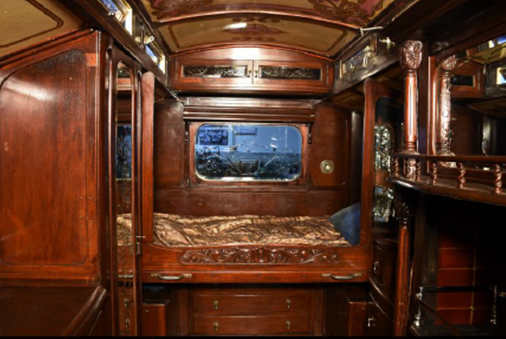
Dark and beautifully finished mahogany is found throughout the Living Wagon’s interior with an obvious concern taken for its craftsmanship and appearance as well as utility. Each space found in the interior is fitted with custom-built high-quality cabinetry to maximize all usable space. Upholstered seating doubles as storage while dresser and tabletops simply convert from large to small surface area with simple brass hinges and hardware.
Eccles Living Wagons of this caliber were extremely rare when new. Fewer than 30 similarly lavish, custom-built-to-order examples are thought to have been produced in the 1920s. Due to their high original costs, which in some cases may have exceeded £700, it is believed that an example such as this was most likely built for a successful traveling Showman, or automobile enthusiast during the latter half of the 1920s. The term ‘Gypsy Wagon’ (now a derogatory term) refers to the Romani people, who were best known for the earlier ornamented horse-drawn wagons.
This caravan likely cost £700 in 1927, equal to $3,402, the same cost as a new 1927 Cadillac 314 Standard Series Seven Passenger Sedan by Fisher, whereas a 1927 Ford Model-T Series was about $800.