1973 Lotus Europa Twin Cam Special
Generously Lent by Museum Members Sue & Nick Nicholson
· Twin Cam Special is regarded as one of the purest expressions of Lotus engineering from the era—combining light weight, balanced handling, and spirited performance in a compact, distinctive design.
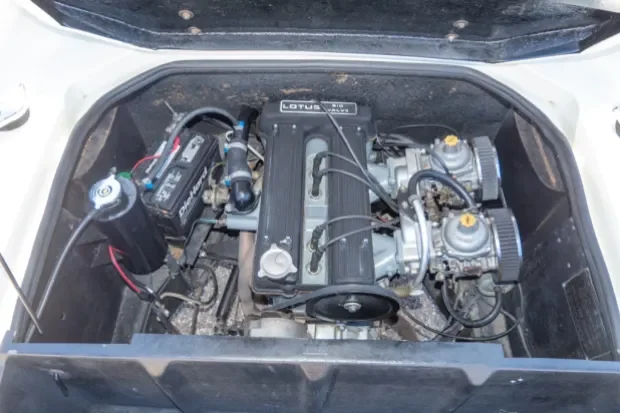
· 1.6-liter engine derived from Ford’s Kent block but heavily modified by Lotus with a twin overhead camshaft cylinder head.
· “Big Valve” version of the Lotus Twin Cam engine, producing around 126 horsepower—impressive for such a lightweight car.
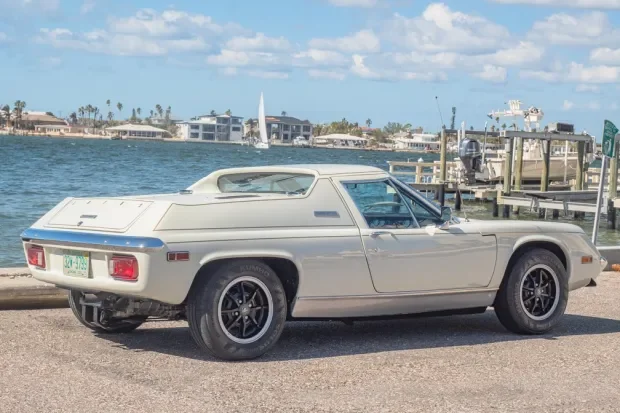
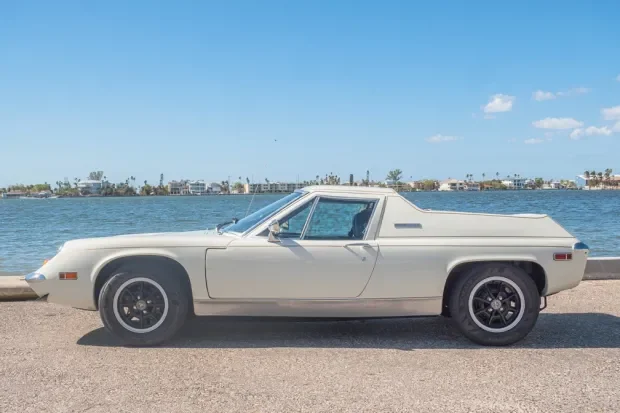
The previous owner of this 1973 Lotus Europa Twin Cam bought it out of a barn on the outskirts of Atlanta in 2002. It was then restored in stages over the next 11 years starting in Georgia and finishing in Florida. When the build was finished, the car was placed in the owner’s collection and entered in shows around Florida, winning Best Lotus at the All British Car Show in Safety Harbor in 2014. The current owners have further sorted the car, and enjoy driving it regularly, including Audrain Cars & Coffee!
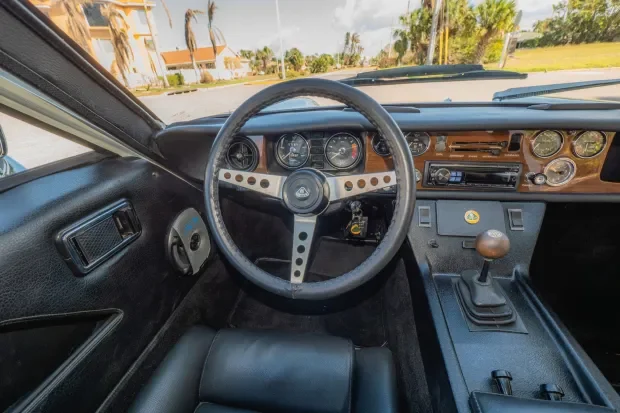
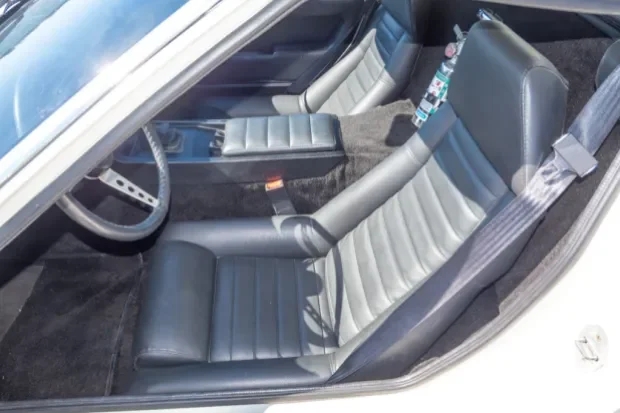
The car is finished in Cirrus White over black vinyl. Exterior features include gold pinstriping, decklid vents, chrome trim, and. Powered by a mid-mounted 1,558cc Lotus twin-cam inline-four mated to a five-speed manual transaxle. Equipment includes 13″ alloy wheels, decklid vents, chrome trim, front disc brakes, bucket seats, power-operated side windows, front and rear trunk compartments, aftermarket Alpine CD player, and TEX side mirrors.
The Europa debuted in 1966 and featured a fiberglass body mounted over a steel backbone chassis that was developed from the earlier Elan. This Twin Cam Special was refinished in Cirrus White in 2013 following repairs to the fiberglass. The badges were also replaced at that time.
The Lotus Europa Twin Cam Special represents the final and most refined evolution of the Europa line, a lightweight mid-engine sports car introduced by Lotus in the 1960s under the philosophy of Colin Chapman: “simplify, then add lightness.”
The original Europa debuted in 1966 as the Series 1 (S1), designed primarily for the European market. It featured a fiberglass body bonded to a steel backbone chassis and used a modest Renault-sourced engine. Its groundbreaking mid-engine layout—rare at the time for road cars—delivered exceptional handling, though practicality and refinement were limited.
By 1968, the Series 2 (S2) improved usability with features like opening windows and a more comfortable interior. However, performance enthusiasts wanted more power. This led to the introduction of the Twin Cam variant in 1971, which used a 1.6-liter engine derived from Ford’s Kent block but heavily modified by Lotus with a twin overhead camshaft cylinder head. This significantly boosted performance and aligned the car more closely with Lotus’s racing pedigree.
The Europa Twin Cam Special, launched in 1972, marked the pinnacle of development. It featured the “Big Valve” version of the Lotus Twin Cam engine, producing around 126 horsepower—impressive for such a lightweight car. Cosmetic upgrades were available including a distinctive black-and-gold livery inspired by Lotus’s Formula One success, particularly their association with John Player Special sponsorship.
Mechanically, the Twin Cam Special also benefited from refinements in transmission and reliability compared to earlier Europas. A 5-speed gearbox was eventually introduced, improving highway usability.
Production of the Europa ended in 1975, making way for newer models like the Lotus Esprit. Today, the Twin Cam Special is regarded as one of the purest expressions of Lotus engineering from the era—combining light weight, balanced handling, and spirited performance in a compact, distinctive design.
Specifications:
Engine: Mid-mounted “Big Valve” 1,558cc Lotus twin-cam inline 4-cylinder with twin 2 bbl Stromberg carburetors
Gearbox: 5-speed manual transaxle, rear wheel drive
Power: 126 hp; 104 lb-ft torque
Brakes & Suspension: Front disc, rear drum; four-wheel independent suspension
Wheels: 13″ Brand Lotus alloy wheels with Kuhmo Solus TA11 tires