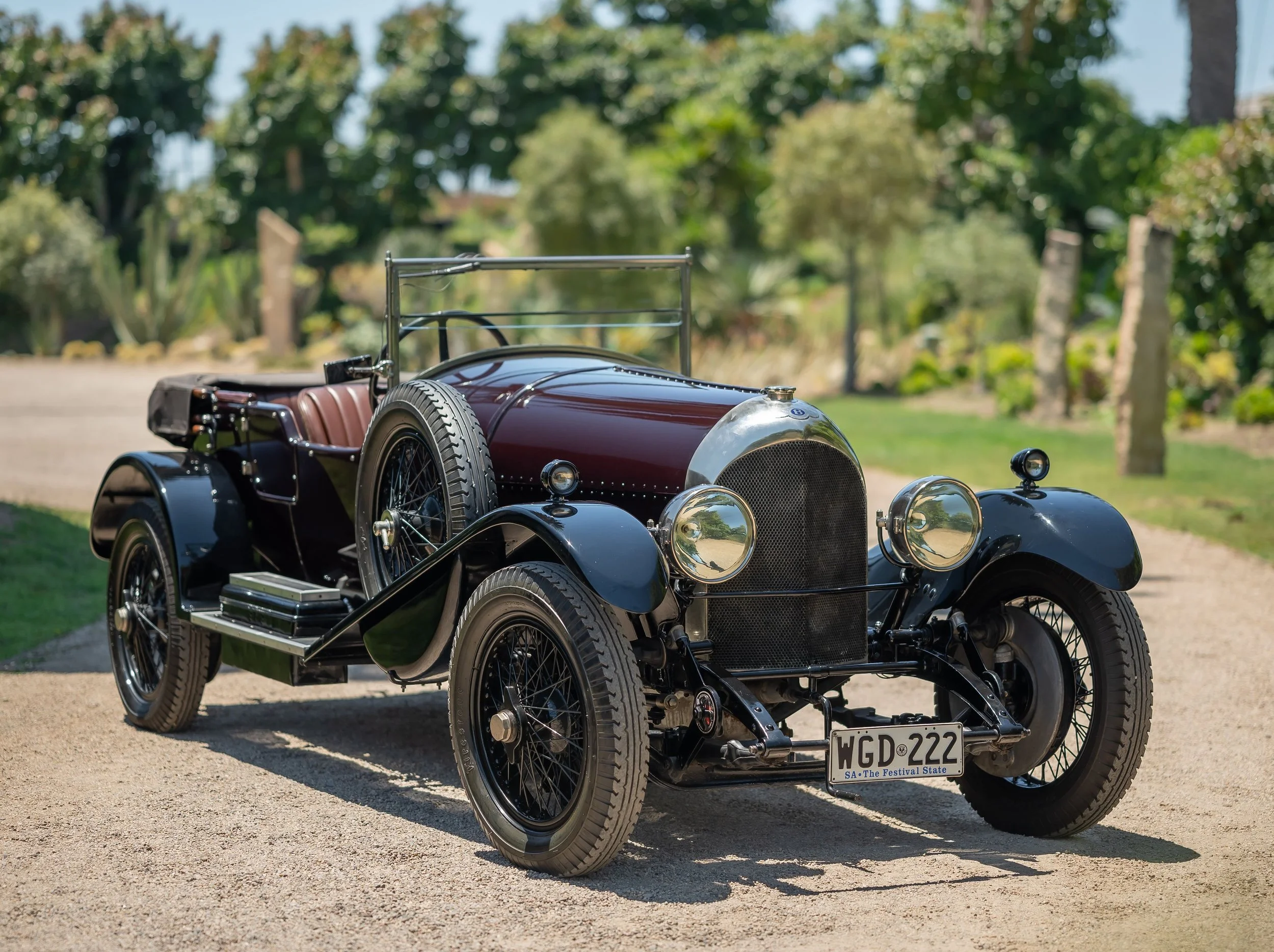
1937 Bentley 4 ¼ Litre Open Two-Seater by Carlton
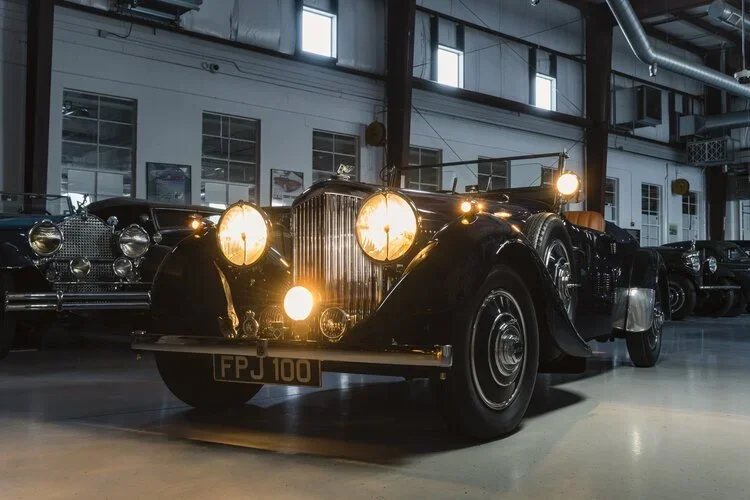
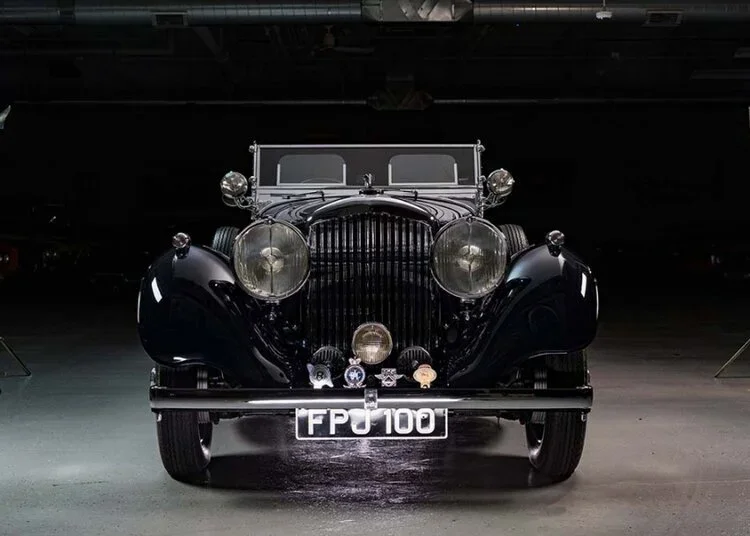
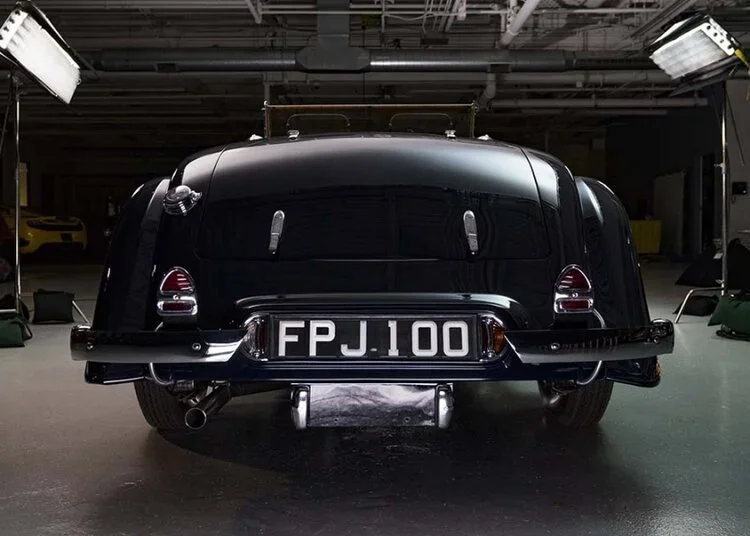
· The only known Carlton bodied Bentley 4 ¼ L roadster ever built
· Marketed as a "Silent Sports Car" for its high-speed performance and refinement
After the demise of the WO Bentley company, Rolls-Royce acquired Bentley Motors in 1931. The two British car makers were a perfect match with Rolls-Royce primarily building luxurious touring cars and Bentley concentrating on the sportier models that Bentley was famous for. Rolls-Royce set about designing an appropriate car, one that would honor the “W. O. Bentley” heritage, yet one that would also not be confused with the statelier cars wearing the Rolls-Royce badge. The Rolls-Royce factory was at the time located in the north of England in Derby, and the subsequent Bentley models became known as Derby Bentleys to distinguish from the Cricklewood cars from the WO Bentley era. The works manager at Rolls-Royce, Ernest Hives, who had been with Charles Rolls since 1903, headed the team that was tasked with designing the all-new Bentley with the instruction that it be a sports car that would appeal to a wide range of prospective buyers. A car that could be “driven fast with safety…and tour without fuss and noise”.
The first Rolls-built Bentley, a 3½-Litre model, was launched in 1934 based on the earlier Rolls-Royce 20/25 chassis. These were popular but didn’t achieve the “sportiness” that the company wanted and so, in 1936, the engine capacity was increased to 4¼ liters and its Stromberg single carburetor was substituted by more powerful dual SUs. Finally, Rolls-Royce could proudly offer a fast, silky, exciting car that soon became known as the “Silent Sports Car.” Everything about these Derby Bentleys, from suspension, engine performance, braking, and lighting, were among the best on any car available at the time. Features such as adjustable hydraulic shock absorbers, a 4-speed manual gearbox with synchromesh on 3rd and 4th gears, and servo-assisted 4-wheel brakes set this car apart from almost all other luxury cars from the 1930s.
As was the custom in the 1930s, the rolling Bentley chassis was sent to one of the many coach builders that specialized in the many different body styles that were popular at the time. Of the dozens of Derby coachbuilders like Park Ward, Vanden Plas, and Gurney Nutting, one other London based coach builder was chosen for this particular Bentley 4¼. The Carlton Carriage Company, established in London in 1924, was a more exclusive body builder, and built just four bodies on the 4¼-Litre chassis. This is one of those four, chassis number B55KU, and it is the only open two-seater tourer ever built.
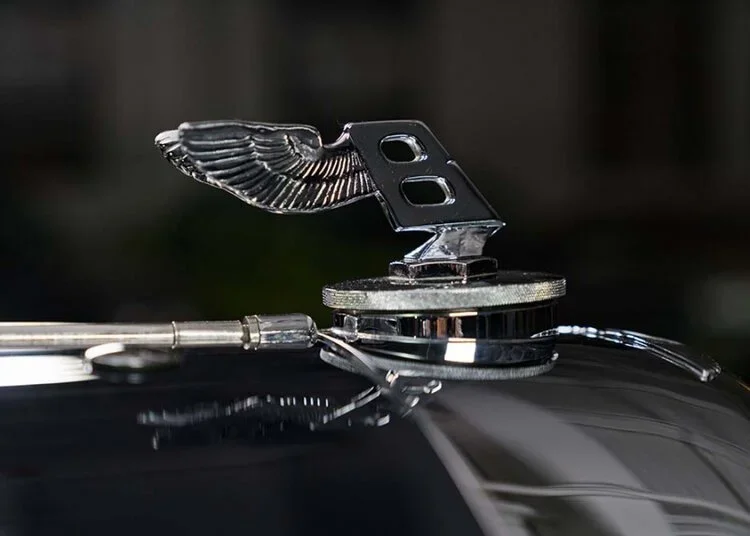
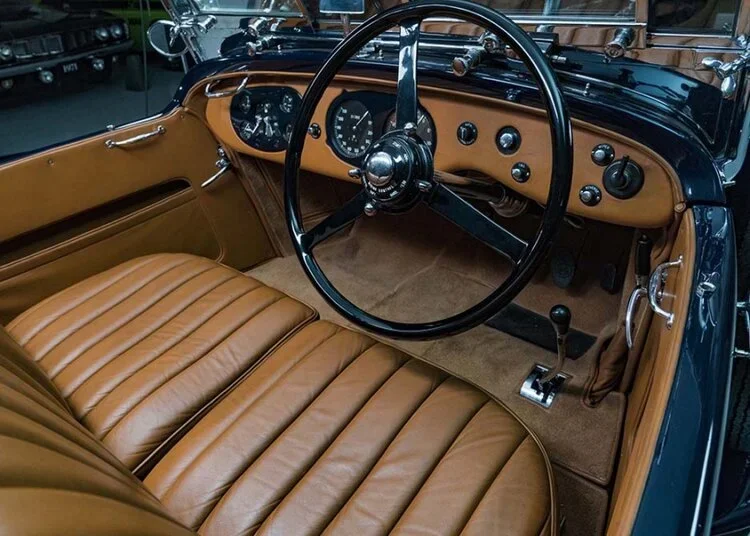
Carltons two-seat drophead design is as attractive with the hood up as it is when lowered to its concealed-hood position. By positioning the spare wheel in the front wing rather than the boot lid, the result was both streamlined and elegant. To add to the sporty nature of the car, twin WO-vintage, Brooklands style fold-down aero screens were incorporated to add “wind in the hair” excitement. The slanted winged B mascot and Marschal headlamps with a centrally mounted driving lamp add to the sports car look.
The car was sold by the London Bentley dealer, H. R. Owen, in July 1937 to its first owner Gordon Wood, of Weybridge, England. The car competed in several rallies in 1939, including at the Royal Automobile Club’s Blackpool Rally and the prestigious J.C.C. Brooklands Rally. After several decades spent in England, the car began to tire until Dale Powers, of Florida, acquired the car and spent ten years on its complete restoration. Afterwards, he participated in numerous CCCA caravans and tours before selling.
This Bentley 4¼ was acquired by the Audrain Collection in 2014 and has been shown on three prior occasions, including the Audrain Museums very first exhibit that year.
Specifications:
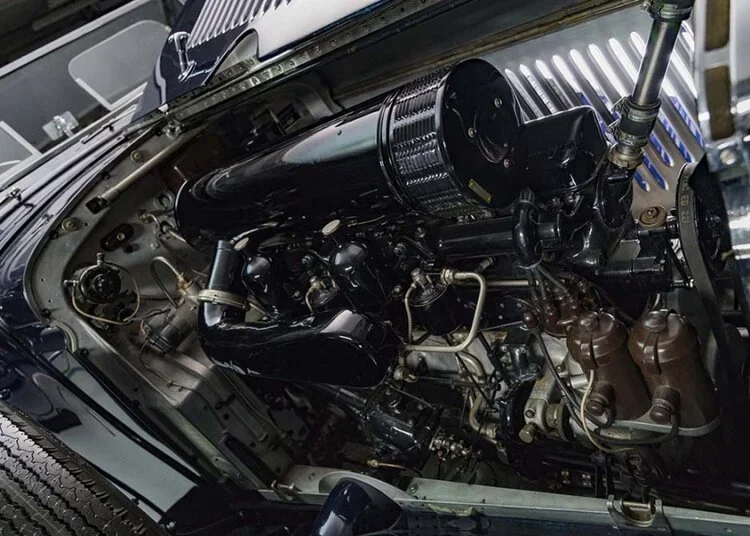
Engine: Overhead valve 4.25-liter inline 6-cylinder
Carburetion: Twin SU carburetors
Power: Approx. 125–126 bhp
Top Speed: ~100 mph
Gearbox: 4-Speed manual (with synchromesh on 3rd/4th)
Chassis: Steel with centralized lubrication, 126-inch wheelbase
Suspension: Semi-elliptic springs with adjustable hydraulic shock dampers
Brakes: Four-wheel mechanical brakes with servo-assist