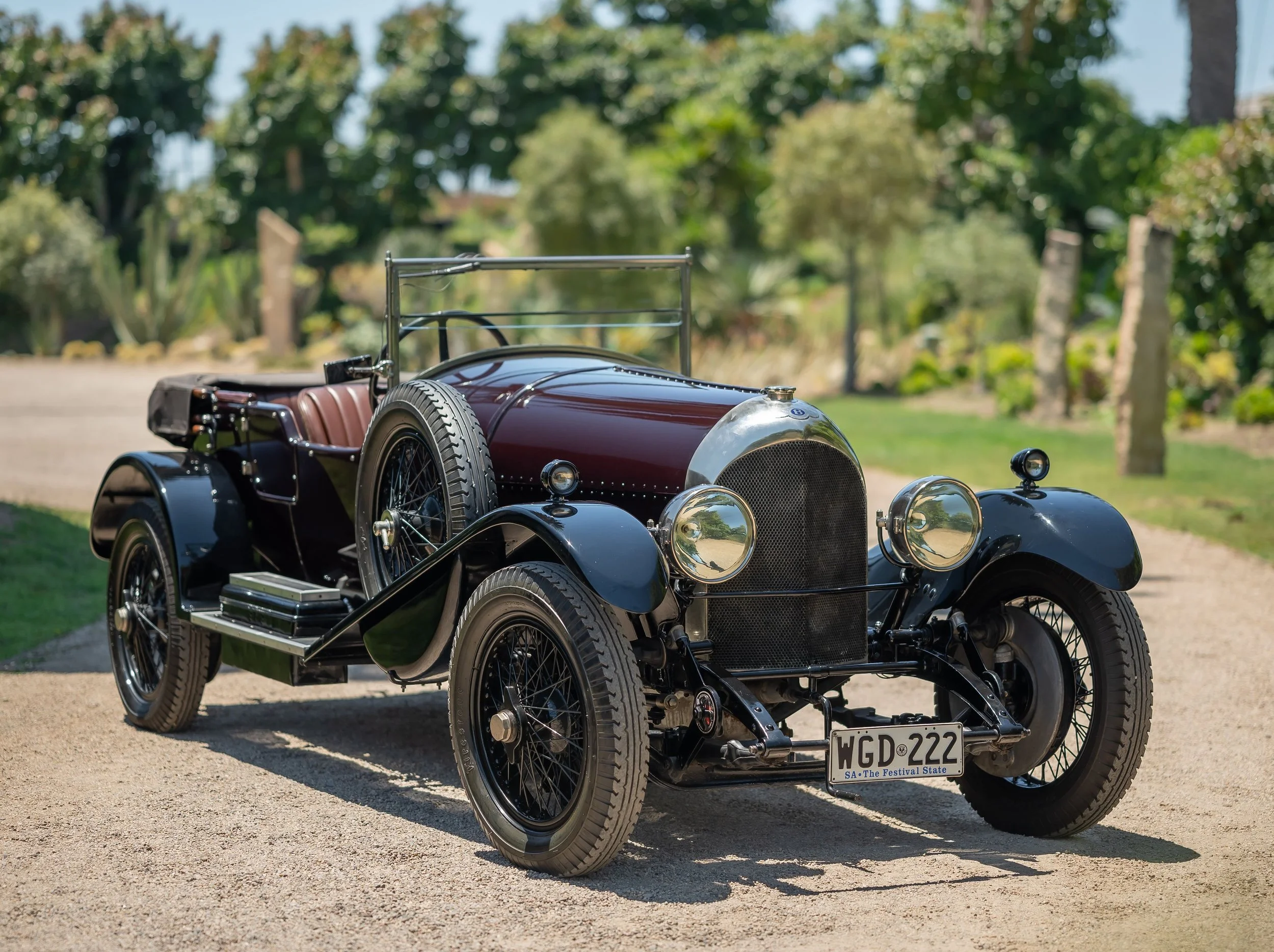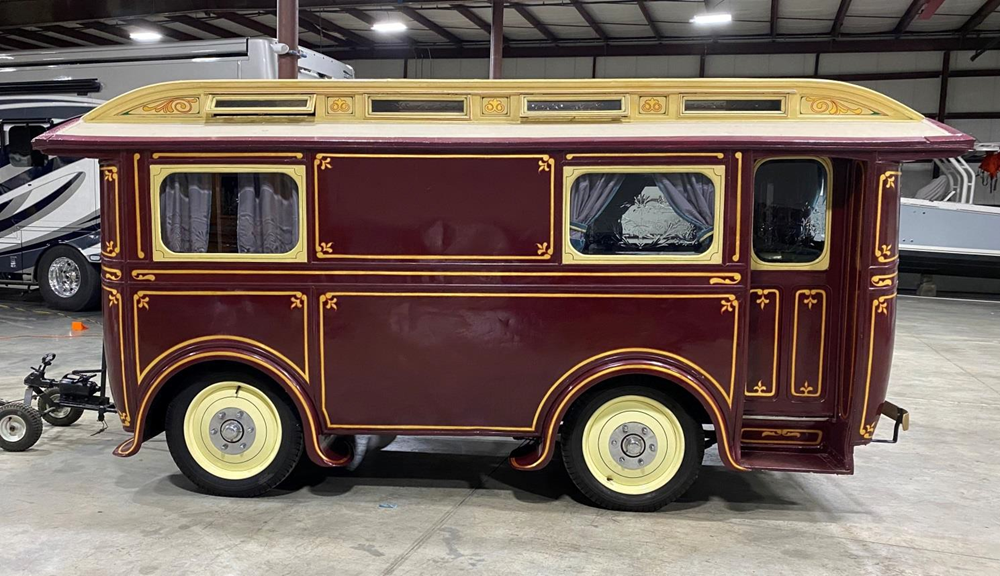
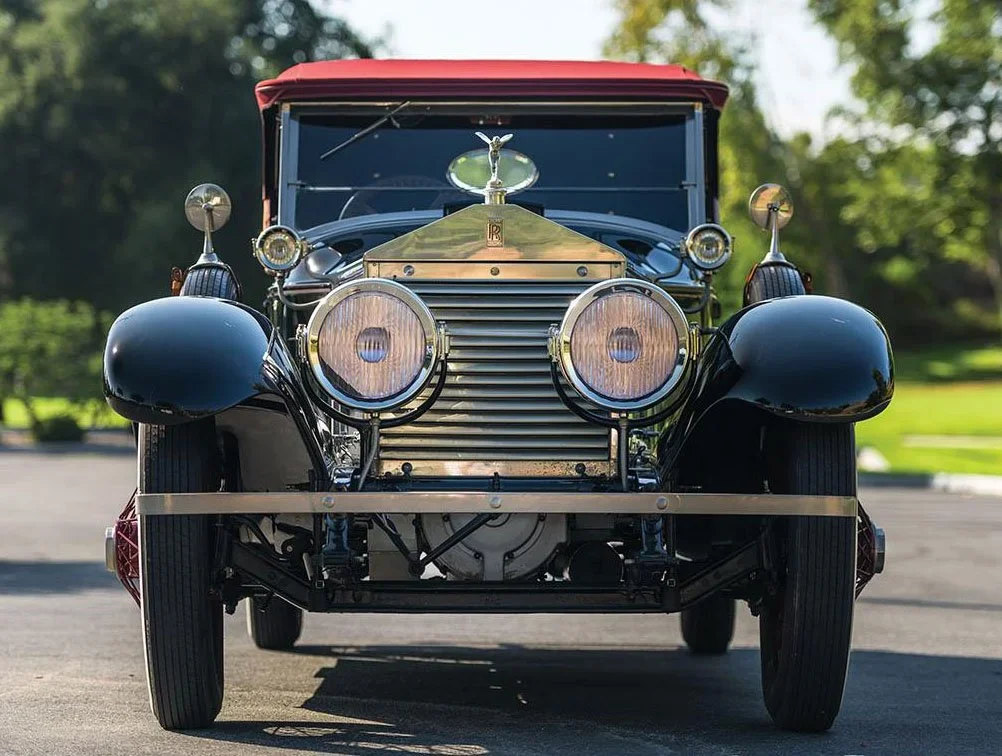
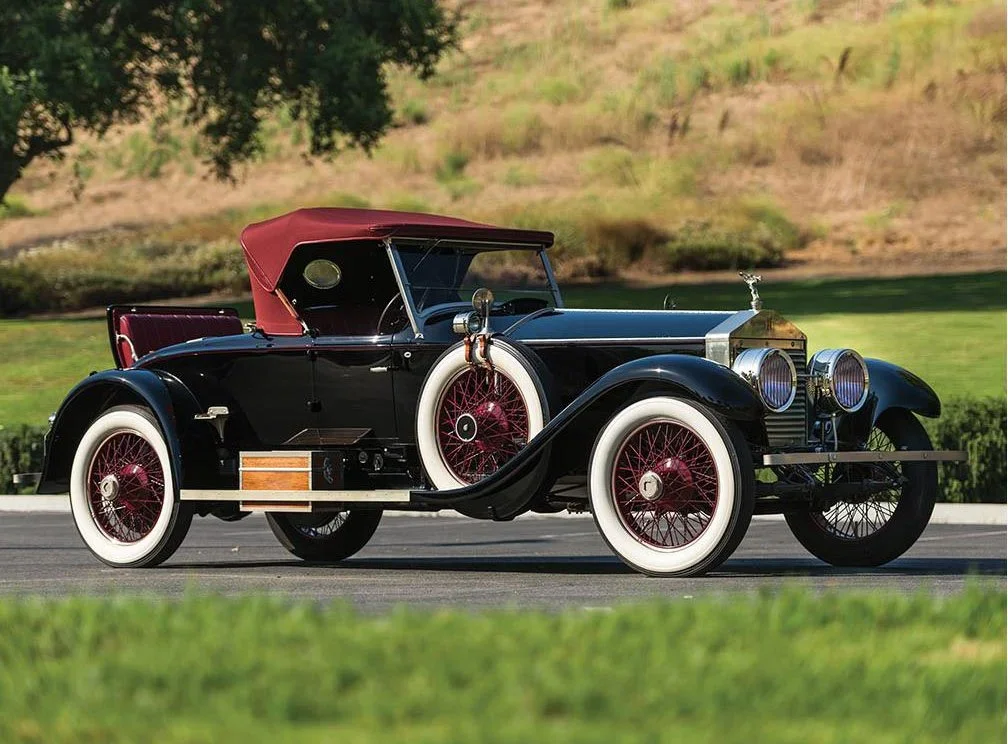
1923 Rolls-Royce Silver Ghost Piccadilly Roadster
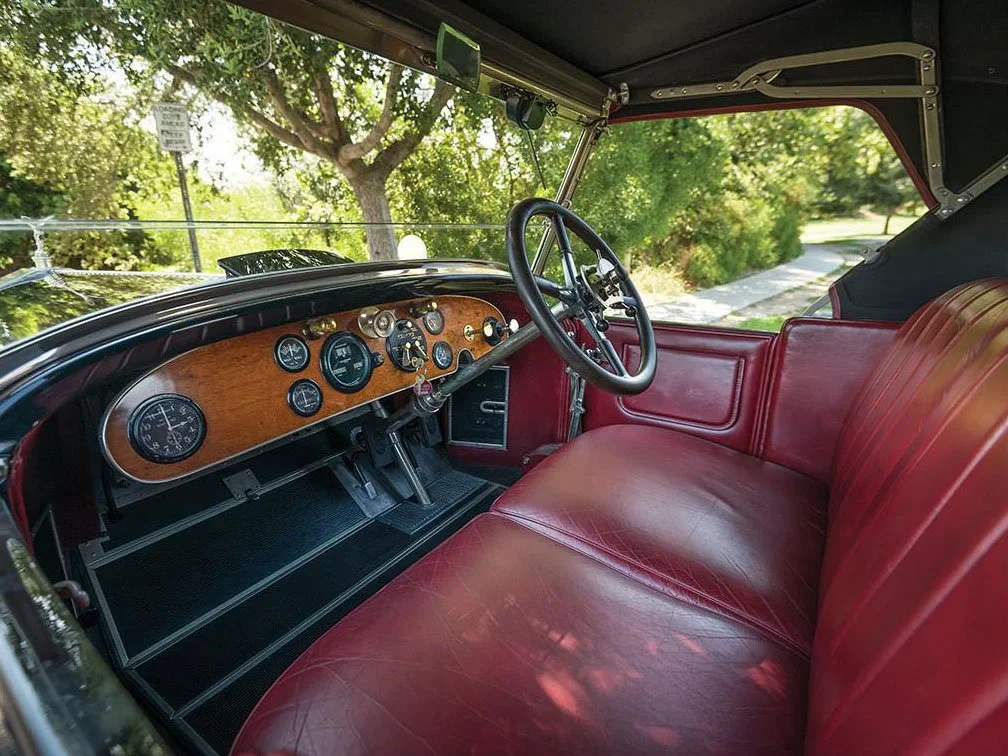
· Powerful yet very quiet engine and running gear for a larger car than previous models.
· Fuel system was of Rolls -Royce’s own design.
· Chassis and engine lubrication was an innovative pressurized system
Upon its launch in 1906, the Silver Ghost was a major leap for (at the time) the fairly new firm of Rolls-Royce Motor Cars Limited. This was a larger, more powerful car than previous models, the new model was praised for its proportions and powerful yet very quiet engine and running gear. The Silver Ghost was soon adopted as the carriage of choice for the aristocratic and well-healed of Edwardian Britain.
One of the first Ghosts had silver-plated fixtures and trim, and the body had a bright silver finish. Soon after it was built, it attracted national attention by completing a 15,000-mile endurance test in the British Isles, stopping only for gas. Afterwards, the car was inspected for signs of wear, and the total cost of repairs came down to no more than two pounds. Soon, all the Silver Ghosts bear the name, regardless of what color they were painted.
With Britin struggling economically after WW1, Rolls and Royce looked to the Unites States to grow their empire. A New York holding depot was established with coach builders Brewster & Co, who were responsible for applying bodies to most imported Ghost chassis. Ultimately it made sense to assemble vehicles in the US, to avoid import duties for American customers. So, in 1919, Rolls Royce purchased the American Wire Wheel Co. factory building chassis in Massachusetts, and the Springfield Silver Ghosts were born.
One hundred and five examples were produced with the Piccadilly Roadster coachwork for the Silver Ghost; most were re-bodying of older rolling chassis, making “original coachwork” Piccadilly’s rare and highly desirable today. Distinguished by its British geographic name, the roadster was dubbed the Piccadilly after the London traffic circle that surrounds the statue of Eros.
Rolls-Royce had its own coachworks on Waltham Avenue in Springfield Massachusetts, but most of the bodies were subcontracted to other coachmakers who delivered the bodies to Waltham Avenue ‘in the white’ - meaning that they were primed but unpainted, and without interior or the top canvas. Waltham Avenue would finish them to suit the customer’s order.
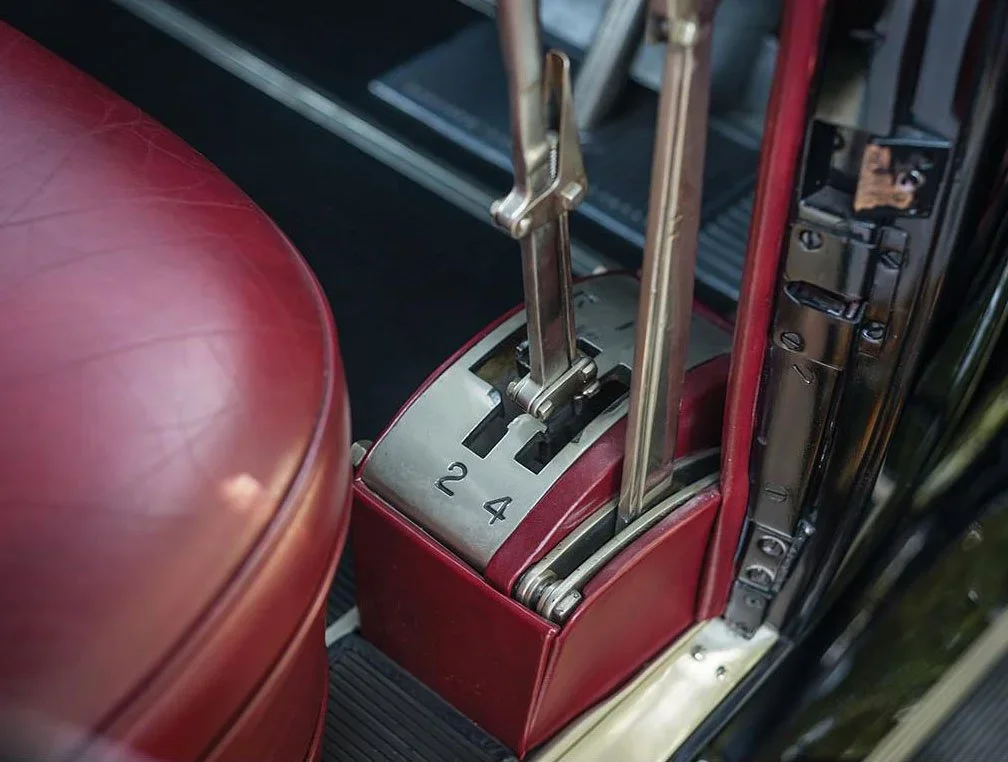
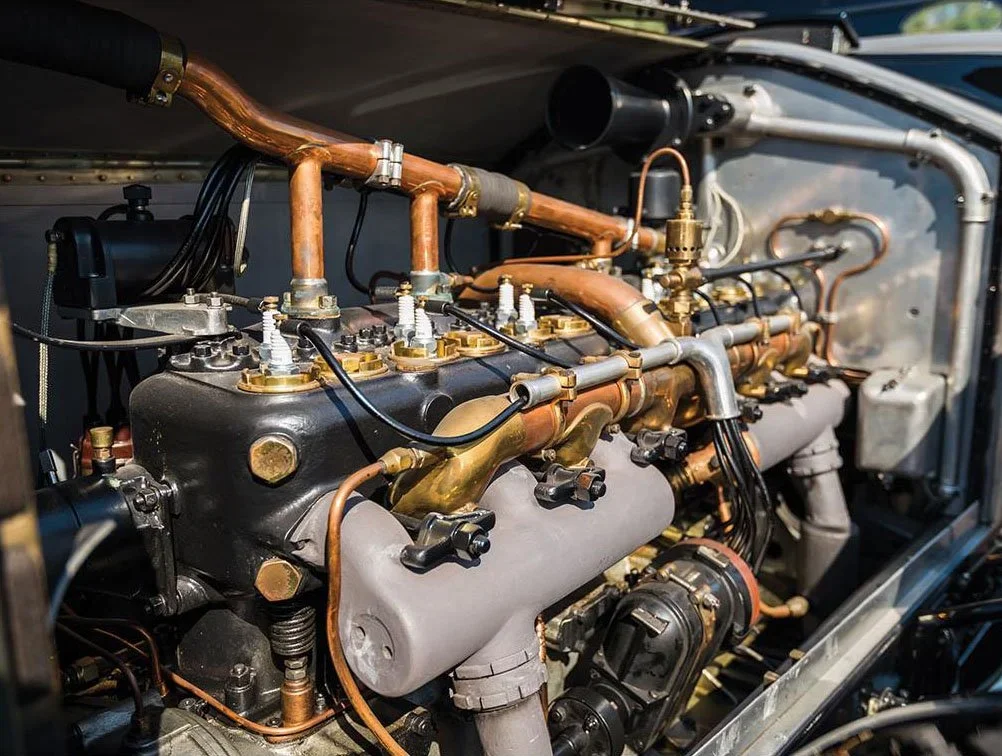
The Springfield Ghosts evolved over the years with locally sourced components such as American Bosch ignition in place of the Watford magneto, American wheels replacing Dunlops, six-volt electrics, and towards the end of production Left Hand Drive chassis and an American style three speed transmission with center change. Fueling of a Springfield Ghost was via a carburetor of Royce’s own design, the twin ignition with single coil/distributor and a secondary magneto ensured its reliability. Lubrication was via an innovative pressurized system, with additional oil being fed directly to the cylinder walls when starting or running at high speed.
The color scheme of this car - maroon body, black fenders and trim, and black top and seats which were very popular. This Piccadilly was built by the Massachusetts body maker Merrimac, who built most of the roadster and tourer “Springfield Ghost” open bodies.
Most Silver Ghosts were driven by chauffeurs rather than the owners. For customers, a test drive normally meant riding in the back while a Rolls- Royce chauffeur demonstrated the car’s exceptionally smooth ride and quiet power. To ensure that the chauffeur made a positive impression, a list of instructions was given on politeness and filling up petrol.
This example was delivered to its first owner, B.M. Taylor of Boston, on January 17th, 1924. Subsequent owners were Mrs. Louisa F. Connelly, Peter Knoefel, and a Mrs. Wagner. In 1939 the Rolls was purchased by Boris Lakusta, of San Rafael, who would drive it in the California deserts for over 30 years. It was then acquired by longtime Pebble Beach Concours co-chairman Lorin Tryon, who in 1983 sold it to Bill Dobson. Mr. Dobson, in turn, passed the car to dedicated Rolls-Royce collector, Pebble Beach judge, and friend to many, Dr. James Stickley, in 1989.
Well-known craftsmen Abe Guise, Rick Hamlin, and the late Mike Standifer completed a full restoration of the car. The car remained largely original and intact, aside from smaller wheels and a cut-down windshield, both of which were reversed to the original specifications. Fresh out of its restoration, it was exhibited at the 2003 Pebble Beach Concours d’Elegance, winning 3rd in Class.
Specifications:
This car retains its original Chassis No. 367XH, Engine No. 21-192, and Body No. M585.
Engine: Straight 6-cylinder
Displacement: 7.0 Liters
Horsepower: 80 hp at 2,250 RPM
Transmission: 4-speed manual