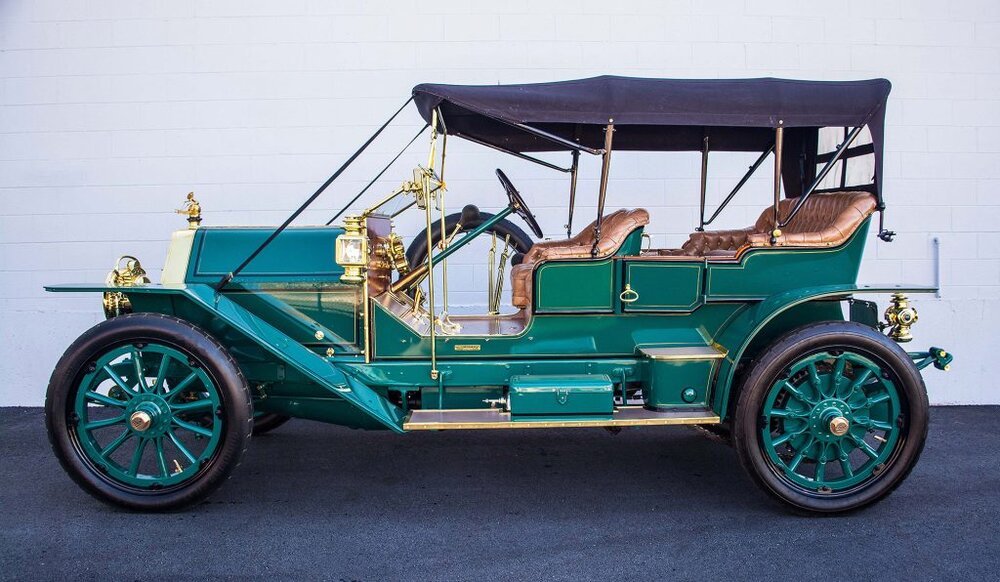
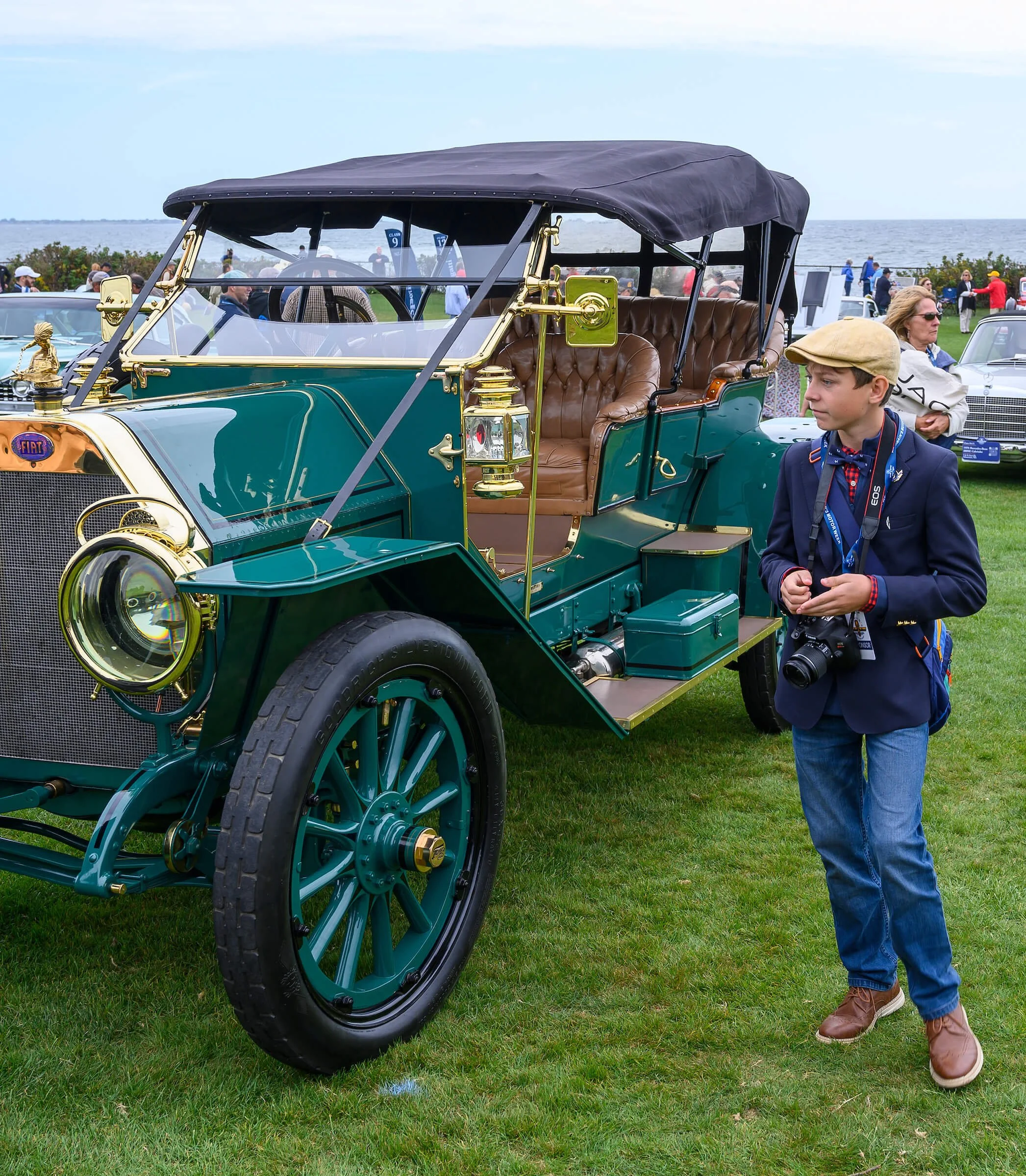
1911 Fiat Tipo 6 Demi-Tonneau
Best in Class, 2012 Pebble Beach Concours d’Elegance
Raced in the 1911 Vanderbilt Cup
Purchased as a rolling chassis, having a race body, then later a touring body
Exhibited at the inaugural 2019 Audrain Newport Concours d’Elegance
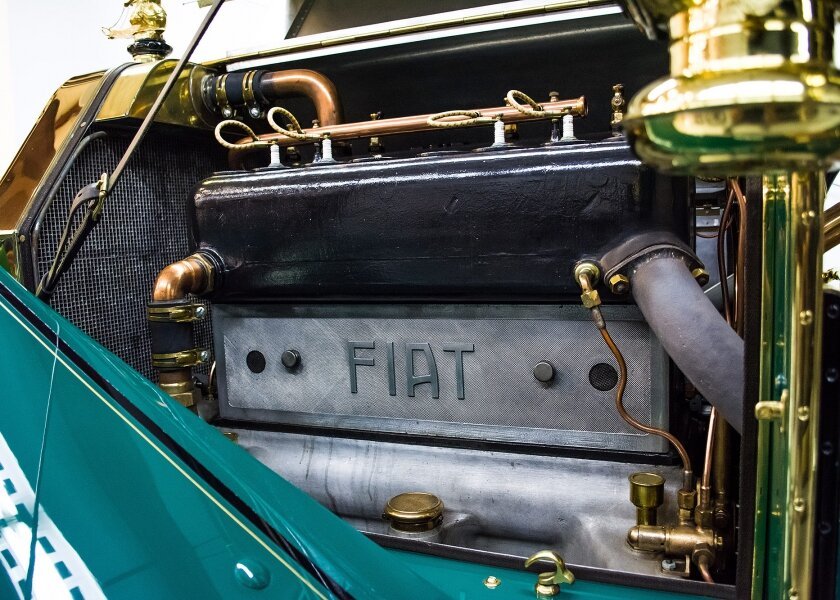
Fabbrica Italiana Automobili Torino (FIAT) began making automobiles in 1900, with 35 employees. The company quickly became renowned for their creative engineers on staff as the brand grew. By 1910, FIAT had become the largest automobile company in Italy, and built a new plant in Poughkeepsie, NY that same year.
Owning a FIAT back then was a mark of distinction. The company was one of the top importers of chassis into the U.S., and like most high-end cars of the time, early FIATs were sold as rolling chassis, having custom coach-built bodies installed to the owners’ specifications. This wonderful 1911 FIAT Tipo 6 is believed to be one of only 28 examples produced and is said to have cost $10,000 new from the coachbuilder, equal to $331,000 in today’s dollars.
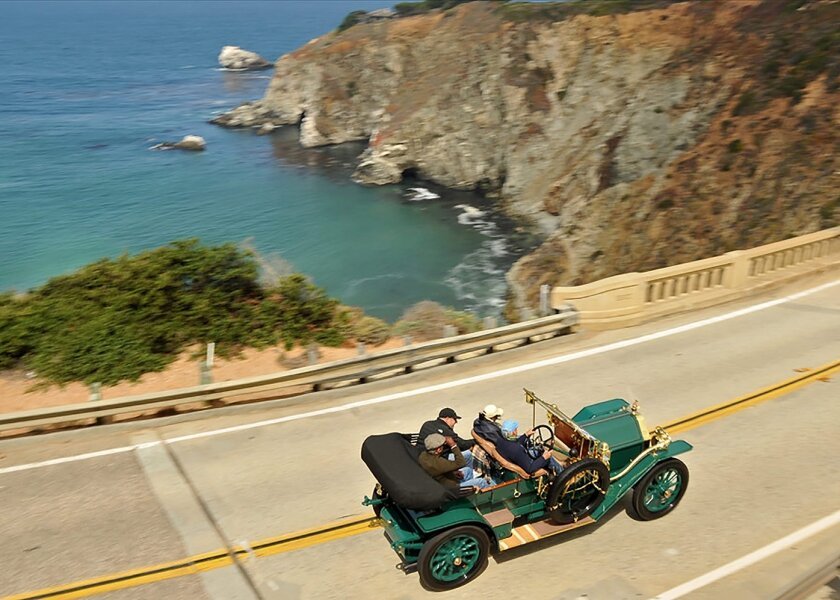
In 1910, Newporter William Wallace contracted the Hulme piano company in Boston, MA to fabricate an angular wood body sheathed in sheet metal onto the chassis in order to race in the 1911 Vanderbilt Cup. The race body was replaced with a Simplex touring body sometime before 1920. This was somewhat typical in period – You want a new car? Just put a new body on your existing chassis! This car would have been seen promenading up and down Bellevue Avenue in the 19-teens and twenties!
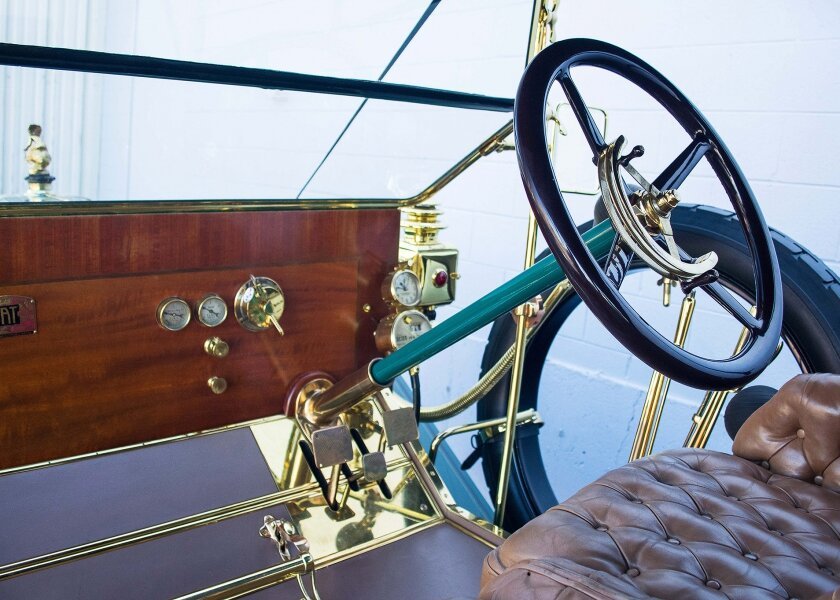
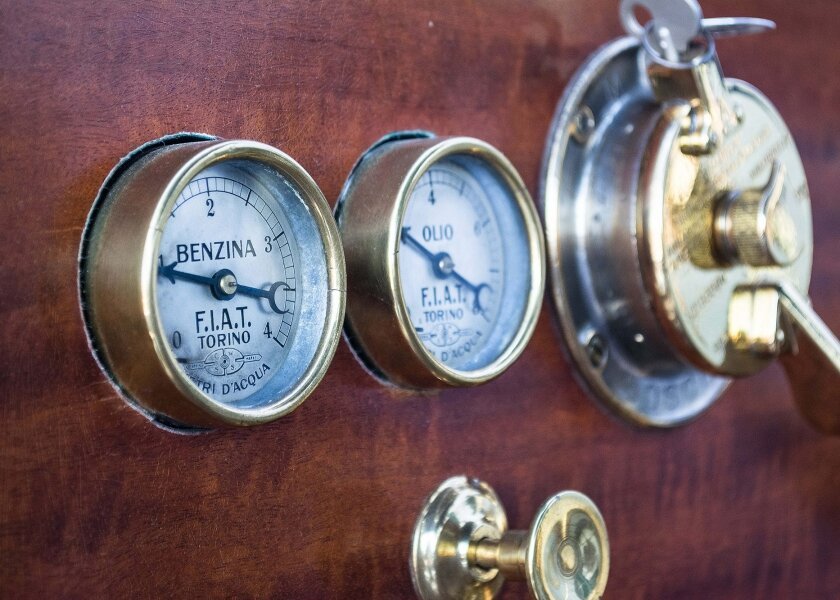
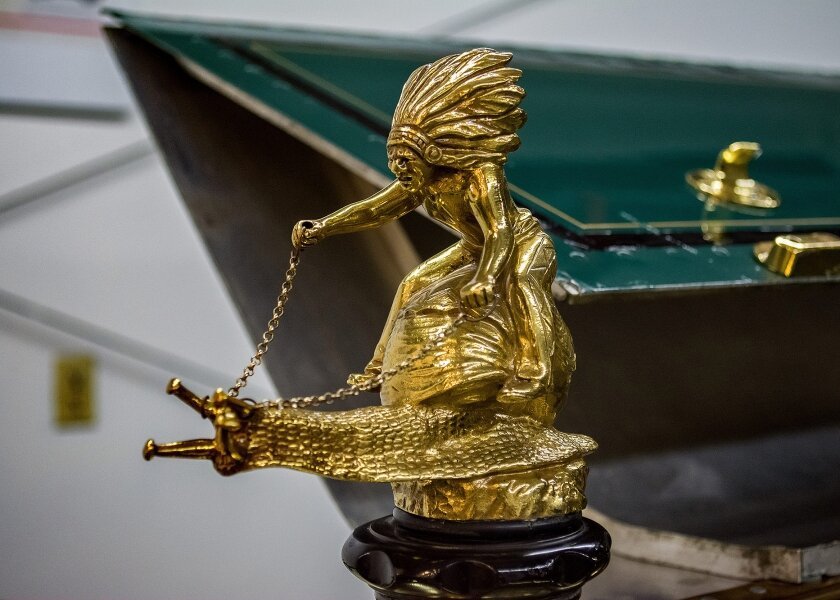
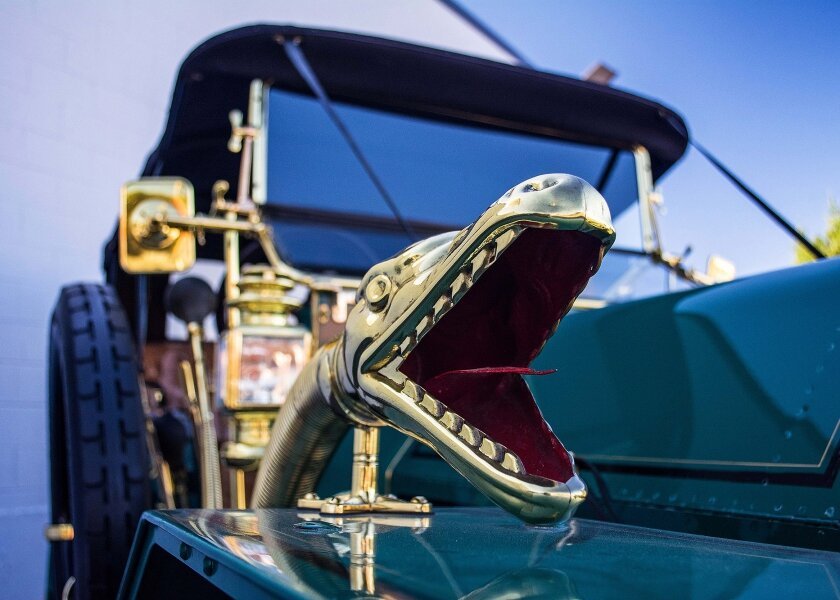
This FIAT Tipo 6 boasts many of its original features and accessories, including its tool kit, a properly-working Warner 100 mph combination speedometer/clock, Nonpareil triple-twist bulb horn, brass boa constrictor bulb horn (not a reproduction), and Badger Brass Solarclipse headlamps and carriage lamps – all having the correct date code.
Specifications
Configuration: Front engine, dual chain rear wheel drive
Engine: 9,026 cc side-valve inline 4-cylinder, single Fiat in-block tubular carburetor
Horsepower: 75 hp at 1,000 rpm
Transmission: 4-speed manual gearbox, dual-chain or double-side chain drive
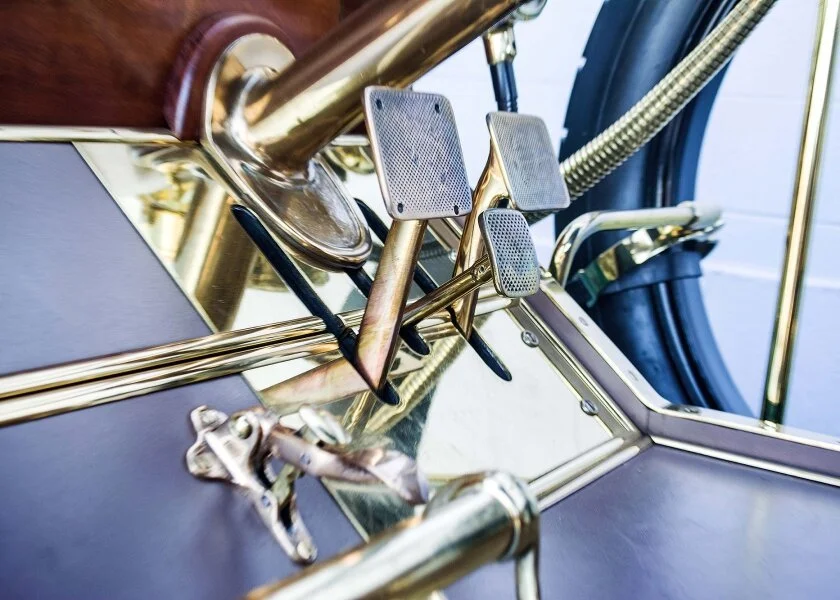
Brakes: Water-cooled service transmission brake, rear-wheel hand brake